New · Binauro Immersions
Let the soundscape change around you
Enter complete spatial journeys where weather arrives, daylight changes, and sounds move through 3D space over time.



Frequently Asked Questions
Ambient sounds, soundscapes, masking noise, headphones, and reuse basics.
What are ambient sounds?
What’s the difference between ambient sounds and ambient noises?
What is an ambient soundscape?
Do ambient noises help with sleep?
Which ambient noises are best for focus?
What’s the difference between white, pink, and brown noise?
Do I need headphones for binaural soundscapes?
What are spatial soundscapes?
How is spatial audio different from surround sound?
Can ambient sounds help with tinnitus masking?
Can I use these sounds in my streams/videos?
How do I build my own mix (and a spatial mix)?
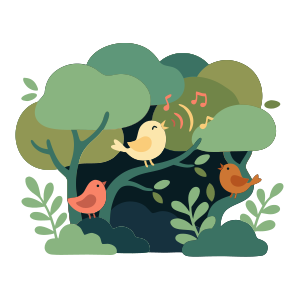
Bird sounds can help your nervous system stand down.
Natural sounds give the brain light, non-threatening cues: water, leaves, distance, rhythm, and birdsong. Research on birdsongs shows short listening sessions can reduce anxiety, while nature-exposure studies link natural environments with lower amygdala activity during stress tasks.
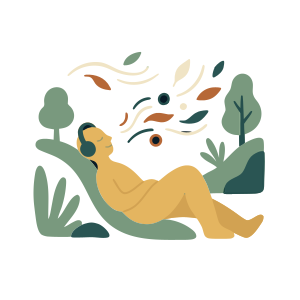
Put on headphones for the full 3D effect.
These are binaural spatial recordings, recorded with two microphones positioned like human ears. When you listen with headphones, the brain thinks its actually listening with its own ears, which creates a natural sense of depth and direction, what we call 3D Spatial Audio. You can hear birds behind you, water to your left, wind above you. Regular speakers are fine too but lose the 3D effect.
Binauro Blog
A few notes on how Binauro can help you.


More tools to help you
Binaural Beats Generator
Custom beats. Use headphones.
Isochronic Tones
Single-pulse tones. No headphones.
Soundscapes
Soundscapes for focus & sleep.
Noises
Noises to mask distractions for focus.
Binaural 3D Audio Renderer
3D placement. Binaural export.
Spatial Audio Mixer
3D stem mixing. Binaural export.
Equalizer
10-band EQ. Quick fixes.
Preset Downloads
Download ready-made sessions.
Blog: Techniques & Tips
Guides on focus, sleep, audio.